
1. Recommendation: Transparency regarding pricing increases traceability and guest confidence
- A brief and concise explanation of pricing should be reflected across all channels, e.g.:
- website
- booking section
- brochure
- offer & follow-up email
- etc.
- Therefore a dedicated newsletter that only addresses the change is not essential
Important: in addition the benefits for the guest should always be emphasised, see point 2.
2. Highlighting the benefits for guests increases acceptance and the perception of fair pricing
- early bird bonus → this also encourages early booking behaviour
- price reductions for longer stays
- emphasis on fair pricing
- working with best price guarantees
- find practical examples below
3. A detailed description and deep information level give guests a feeling of security and fairness
- in the written offer, transparently limit the validity to xx days and specify the exact expiration date
- send a follow-up email after xx days
- display ‘from-to prices’ on the website (depending on season, room category, length of stay, days of the week, etc.)
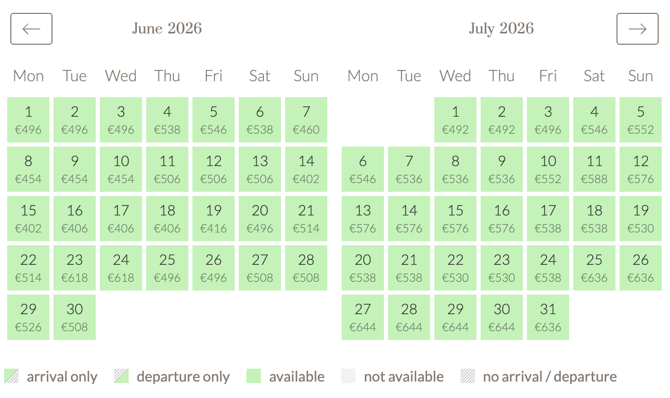
- display daily rates in the online booking process instead of working with static price lists
Example of an online booking section:
4. Employee training
- Develop a revenue management guideline
- Involve employees (marketing, reception, reservations)
- Offer ongoing employee training
- Hold management meetings on the most important key figures
Practical examples
“With our flexible pricing system, which is based on the requested period, demand, and occupancy, we guarantee the price quoted for 48 hours after receipt of the offer. (if the room offered is still available)”
"Early booking pays off. All offers are non-binding for you and for us and will not be blocked. The price offered is valid for 7 days after the offer is made.“
”We work with flexible prices. This is our best price offer. It can be booked at this price for 4 days (96 hours) after receiving the offer. Please note that we do not reserve the room for you. We recommend booking quickly."
“We have a flexible pricing system with the best price for our early bookers. Our prices are adjusted daily according to occupancy and room category. The longer you enjoy your stay, the better the price.”
“We reserve the right to change prices during the season.”
Dealing with frequent guest questions
The recommendations are based on positive examples and are intended to serve as inspiration. You can expect positive feedback if you remain honest and transparent and consistently stand behind your price.
Important: Comparisons with airlines, vague statements, and going on the defensive are not recommended.
Price increased for guests, especially regular guests
→ Explain the pricing strategy and factors. Important: Mention the benefits, e.g., early bird and best price guarantee or discounts for longer stays. Highlight price fairness.
Uncertainty about price fluctuations or the validity of prices
→ Explain and highlight the advantages of the dynamic pricing system. Emphasize the specific validity period of the offer.
Requests for a better price, e.g.: “The price is cheaper on a large hotel portal.”
→ Explain that offers on the big hotel portals are subject to very specific conditions and that the terms and conditions are not comparable. Highlight the benefits of the hotel booking conditions.
An early booking price was undercut by a last-minute offer
→ Explain that the last-minute offer is subject to very clear rules and, in some cases, less favorable conditions compared to the pre-booked rate.
→ General recommendation for last-minute offers:
- Only use if really necessary
- Define clear rules (specific room categories, minimum stay, cancellation restrictions)
- Communicate conditions transparently
- Clear labeling to avoid confusion